
Compressor Replacement in Austin, TX
Compressor testing and replacement for air conditioners across Austin.
Across Austin, Rollingwood, West Lake Hills, and Lost Creek, compressor trouble often shows up in homes with an outdoor condenser that has worked through a decade or more of Texas summers. Long cooling cycles, high outdoor temperatures, and repeated starts put load on the compressor motor, its windings, and the refrigerant circuit.
A compressor does not always fail without warning. The condenser may begin drawing too many amps, trip the breaker, or run while the supply vents indoors blow warm air. We check the compressor against the contactor, capacitor, wiring, and refrigerant readings before recommending replacement.
A confirmed failed compressor should not wait, especially if the condenser keeps attempting to start. Repeated locked-rotor starts can overheat wiring, damage the contactor, and circulate burned oil through the refrigerant lines.
Humming condenser, warm vents
We commonly hear that the outdoor unit makes a loud hum or click but never starts, while the indoor blower keeps moving warm air through the vents. Some homeowners notice the condenser fan running with no cold air at the registers, while others find that the circuit breaker trips shortly after the thermostat calls for cooling. A hot electrical smell near the condenser disconnect, a rattling metal housing, or a compressor that starts and stops within seconds can also point to a problem in the outdoor cabinet. Those symptoms can come from a failed compressor, but they can also come from a capacitor, contactor, wire, or refrigerant condition, and each fault calls for different parts and different work after we test it.
Compressor callout and testing
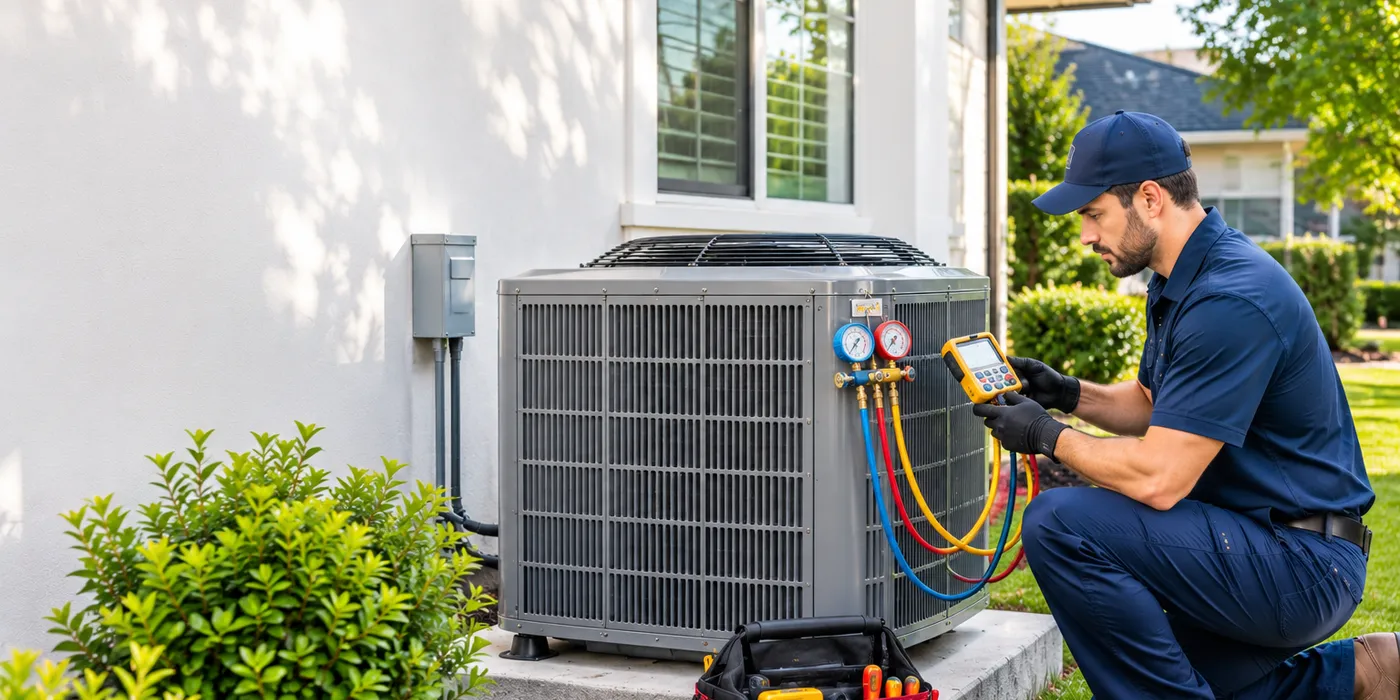
We start at the thermostat, indoor air handler, breaker panel, and outdoor disconnect, then check the voltage reaching the condenser. At the compressor terminals, we measure winding resistance, amp draw, and signs of heat damage on the wire connectors. We also compare suction and discharge pressures with the outdoor temperature and the charging data on the equipment label.
A diagnostic check commonly takes forty-five to ninety minutes, depending on access to the condenser and whether the compressor will run. Once testing confirms a compressor failure, we recover the refrigerant, remove the failed compressor, install the matching replacement, and usually replace the filter drier before pressure-testing the sealed lines with nitrogen. We pull a vacuum to remove air and moisture, recharge the circuit to the manufacturer’s specifications, and verify cooling at the supply vents.
An accessible split air conditioner with a matching compressor available can often be completed in four to eight hours. If the compressor has to be ordered, if the model number does not match available stock, or if damaged wiring needs further work, we book the replacement visit after the correct parts arrive.
Compressor model and line access
The compressor model, refrigerant type, and age of the outdoor condenser move the scope of this job first. Older condensers can use a compressor that must be sourced by model and serial number, while a burned winding may leave acid and debris in the refrigerant circuit that require a filter drier and additional cleanup.
Access also changes the labor involved. A condenser behind a locked gate, beneath a deck, on a roof, or in a narrow side yard can require more time to reach the service valves, disconnect, copper lines, and mounting bolts safely.
We also account for damaged electrical parts found during testing, including a corroded disconnect, heat-marked wire whip, or failed contactor. If electrical changes, local permits, or inspection sign-off apply to the work at the property, those requirements affect the work planned before the compressor is installed.
Model plate and condenser access
Before calling, check the data plate on the side or rear panel of the outdoor condenser for the make, model number, and serial number. If you know the installation year, share it along with the room where the vents stopped cooling and whether the indoor blower or outdoor fan is still running.
Let us know whether a gate, fence, stairs, roof hatch, or parked vehicle affects access to the condenser. A photo of the condenser label and the disconnect box can help us identify the compressor and refrigerant before the visit.
Call ATX Air Conditioning Austin at (737) 377-3845 with those details, because repeated failed starts can overheat compressor windings and spread contaminated oil through the refrigerant lines.
When we are open
Next: get in touch, or back to the home page.